The Strategy Unit is proud to support early-career analysts that help widen access to data science and strengthen diversity in the field. This summer, we welcomed Ashionye Aninze, through the Health Data Science Black Internship Programme, where she worked with our modelling team on a project to make the New Hospital Programme demand model more accessible. In this blog Ashionye shares more about her journey into data science, her work on privacy-preserving synthetic data, and what she has learned along the way.
How did you find your way into data science at the NHS and what really sparked your interest in this field?
My journey into data science began during my undergraduate degree in Computer and Data Science, where I developed an interest in ethics and bias in AI. I learned how our own biases are often unintentionally reflected in the data we use. This is particularly useful in healthcare, where those biases can reinforce or worsen existing health inequalities. This sparked my passion for ethical AI and led me to publish my undergraduate work. I later received a scholarship to pursue my master's in Artificial Intelligence.
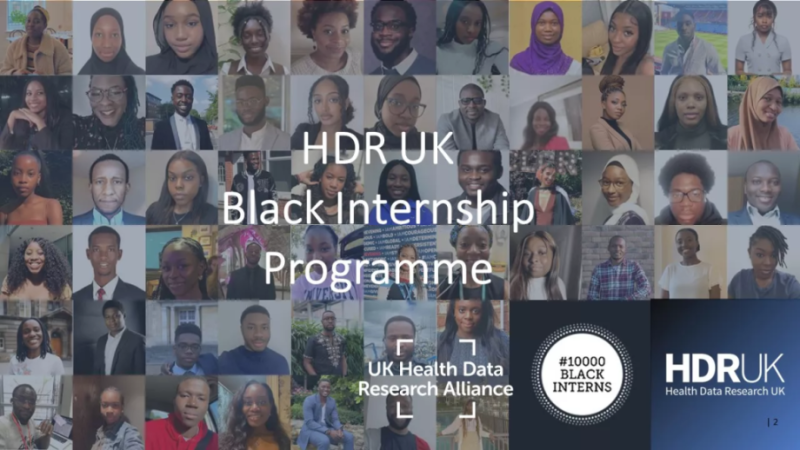
I applied to the 10,000 Black Interns program, and my application was forwarded to Health Data Science Black Internship Programme, who believed my background was a strong match for the Strategy Unit’s focus on equitable, high quality analytics. After interviewing with the team, I was excited to accept the offer for a data scientist internship.
What have you been working on and what difference do you hope it will make?
My main project has focused on improving access to the open-source New Hospital Project demand model. The model relies on highly sensitive patient data, which limits who can use it. To help widen access, I have been developing a privacy-preserving synthetic dataset that can be shared openly.
I developed a rule-based methodology to inject realistic relationships into the data, so that analysts can explore the structure of the model without compromising patient privacy. While advanced generative approaches like GANs can be powerful, they require substantial time and complexity. My aim was to provide a practical, usable dataset within the internship period - something analysts can experiment with, learn from, and build upon.
Ultimately, this work is a step toward making the model more transparent, easier to understand, and creating a foundation for developing accurate and customisable data for individual hospitals.
What advice would you give to someone just starting out in data science?
Try a lot of new things and notice what you enjoy. Don't be afraid to experiment with different projects and tools to discover what you like. A supportive team environment where you feel comfortable asking questions, as I did here, is great for learning. Also, getting involved in open-source projects is a great way to improve your skills and build a portfolio.
In terms of resources, I'm a big fan of newsletters that provide quick, practical insights, and I've learnt a lot from my subscription to the Daily Dose of Data Science. I am also a member a community for women in tech called Rewriting the Code (RTC). They have been a great source for career opportunities and professional support, which has been just as important to my growth as the technical resources I’ve used.
Reflections from The Strategy Unit's Head of Data Science - Chris Beeley
Hosting an intern through this programme has been a great experience for the data science team and the wider unit. Ash was a very strong candidate selected from a high quality shortlist and her work has been really valuable. Having a fresh perspective on our work is always welcome and the whole team benefited from spending time with Ash who brought technical skills and knowledge as well as important questions and a commitment to ensuring that data science and AI tackle rather than entrench inequalities.
Representation is really important in data science- you can test this yourself by asking an AI model to draw a group of data scientists. What comes back? A bunch of white dudes- and certainly no black people. The Strategy Unit is committed to tackling healthcare inequalities and that’s true for patients as much as it is for staff; we hope our involvement in the black intern programme can make a real difference to early career data scientists.
We wish Ash all the best for the future – she is a talented and dedicated data scientist and I’m sure she will have every success in her chosen profession and inspire others like her to do the same.