
Despair now accounts for one-sixth of all years of life lost
Deaths from drug misuse, alcohol use and suicide, often referred to as deaths of despair, are on the rise. New research, by the Strategy Unit and the Health Foundation, show how deaths rates vary by sex and socio-economic deprivation, and how these rates changed during and after the COVID-19 pandemic.
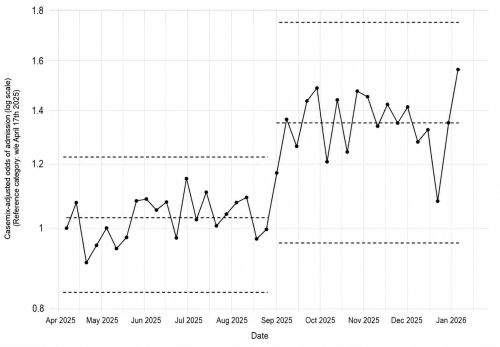
Tracking Hospital Admission Thresholds Within Emergency Departments: A Feasibility Study
This new analysis explores the concept of hospital admission thresholds and assesses the feasibility of tracking these thresholds within emergency departments.
Emergency Departments worked better during the strikes. But why?
New research published in the Journal of the Royal Society of Medicine explores why emergency departments worked better during strikes.
The hidden challenge at the heart of the 10-year plan
A new tool exploring why hospital bed pressure is increasing and what this could mean for future NHS capacity planning.

Improving perioperative flow: using simulation to understand elective care pathways
Why are operations still being cancelled on the day of surgery, despite long waiting lists and high demand? The answer often lies not in a single point of failure, but in how the perioperative pathway functions as a whole.
Discharge before noon
Can data on discharge times help us to improve hospital flow?

Supporting the Mayor's partnership approach to reducing health inequalities in London
Being commissioned by the Mayor of London to produce independent reviews of proposals for major service change, affecting Londoners, perfectly aligns with our commitment to help the health and care system make better decisions and ultimately achieve benefits for population health and wellbeing.

Why NHS models should be built to be reused
Our Head of Simulation, Dr Lucy Morgan, recently appeared on the new podcast Inside the Algorithm, hosted by Cambridg
Big GP practices: light work or spoilt broth?
Larger GP practices may deliver more appointments, but are they the most efficient way to provide good care?
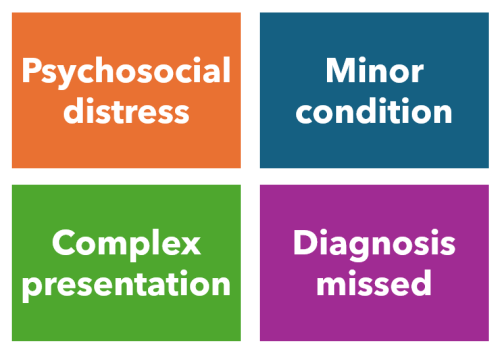
Discharged without a diagnosis
In 2023/24, one million people who were admitted to an NHS hospital in an emergency, were later discharged without a diagnosis. This long-read examines what this means for patients and providers.

A journey into intersectionality
A practical exploration of intersectionality, testing theory through quantitative analysis of hospital readmissions.
Planning for rising renal demand: simulating capacity across the care system
Demand for kidney replacement therapy is rising, and current capacity will not be sufficient over the next decade. This work uses simulation modelling to help systems understand future pressures and test potential responses.

Beating the backlog: Meeting the waiting list challenge
The NHS waiting list in England must halve to reach waiting time targets.

The decline in care continuity is not inevitable
Relational continuity of care, the extent to which patients have an ongoing relationship with a specific clinician in their GP practice, is perhaps
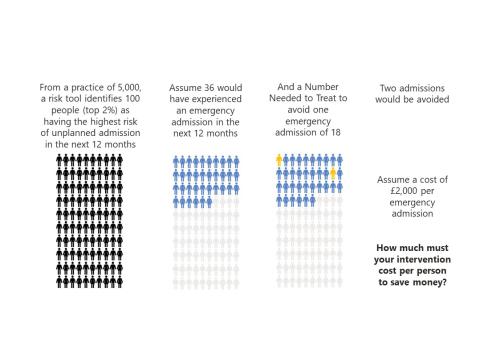
‘To risk stratify or not risk stratify, that is the question’ (At least, it should be)
Risk stratification tools are ubiquitous in healthcare. The concept is simple and seductive.

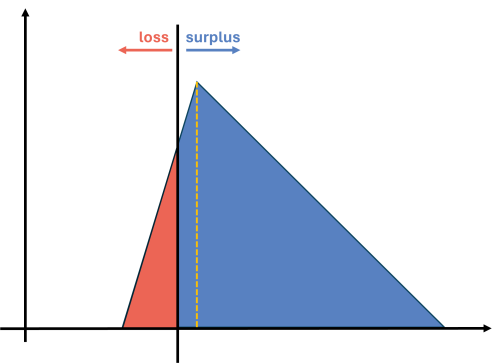
Contracting for health outcomes: from concept through theory to implementation
In this new report, jointly authored with colleagues from the University of York and The Royal Orthopaedic Hospital NHS Foundation Trust, we set out in detail how an outcomes-based contract for elective knee replacements might be constructed, and the potential implications for commissioners, providers, and policy-makers.

Need, demand, and supply of GP services: an old lens on an ever-present problem
About 20 years ago, I attended a lecture given by Andrew Stevens, a rather formidable and austere Professor of Public Health at the Un

Part-time GPs and the decline in continuity of care: a cause or a symptom?
In our recent paper we explore why levels of care continuity have been declining and what might be done to turn things around.

Two sides of the same coin
Hospital demand arising from GPs not seeing patients, is eating into the resources that they would use to manage down the elective backlog. In turn, this is creating more demand for GPs.