
Evidence review: Early diagnosis of cancer
Detecting cancers early is essential to saving lives and reducing the need for invasive treatments.
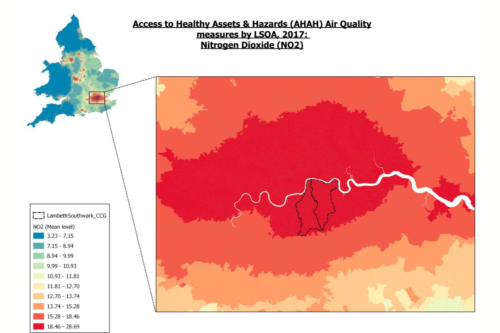
Strategy Unit analysis of air quality highlights inequalities
Poor air quality is the largest environmental risk to public health in the UK and central London has the highest levels of particulate matter and nitrogen dioxide. The Guy’s and St. Thomas’ charity, now operating its programmes under the Impact on Urban Health banner, have committed to 10 years of funding to improve air quality-related health in the residents of South London boroughs of Lambeth and Southwark. The charity commissioned the Strategy Unit to explore the health of several key groups and the factors that most influence health alongside air quality within the area.

Learning from lockdown: support for people experiencing homelessness
There are few clearer measures of societal health than homelessness.

Making sense of evidence
It's time to celebrate World Evidence-Based Healthcare (EBHC) Day. In a world dominated by COVID-19 and the associated infodemic, this day arguably has more resonance. Closer to home, EBHC Day also coincides with our Insight 2020 festival and the launch of the Midlands Decision Support network. What better opportunity to ask, 'what does evidence-informed decision making actually mean'?
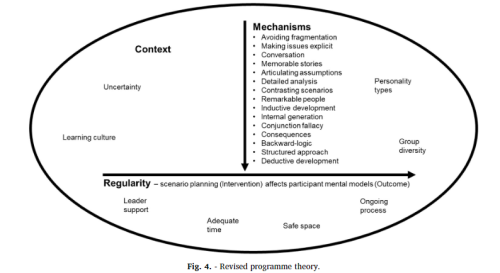
Opening the ‘black box’ of scenario planning through realist synthesis
Scenario planning is recognised as an effective aid to strategic planning in complex, uncertain conditions. It is an approach that the Strategy Unit is increasingly building into its work with health and care systems and third sector organisations.
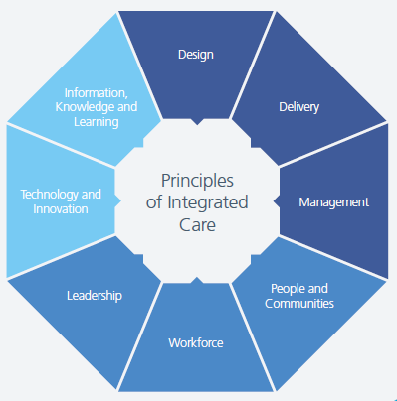
New care models - what's the evidence
High level findings from a series of evidence reviews on new care models.
Integrating health and care services - what works? It’s complicated…
Coinciding nicely with the NHS 70th Birthday celebrations and the parallel discussions of ‘where next and how to do it better’ for the NHS, last we
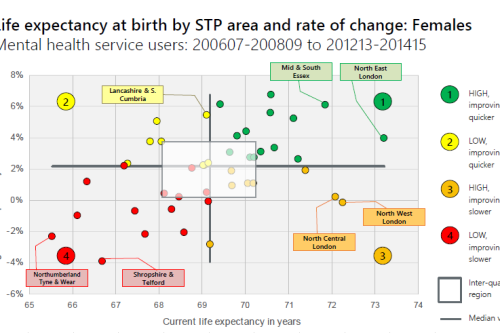
Making the case for integrating physical and mental health services in England - National overview
This is a national overview report of our Making the case for integrating physical and mental health services reporting which took place in July 20
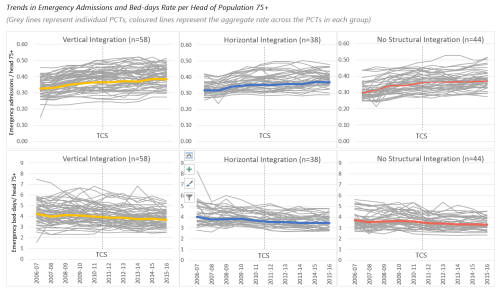
Horizontal or Vertical: Which way to integrate?
In 2011, Primary Care Trusts faced a difficult choice. The Transforming Community Services policy required a complete break of commissioner and provider functions. But what should PCTs do with the community health services they delivered; vertically integrate with an acute trust, horizontally integrate with a mental health trust, or set up a stand-alone community trust or Community Interest Company? Seven years on, this report explores the impact this choice had on the level and growth in emergency hospital use in older people and considers the wider implications for the NHS as it develops new models of care and integrated care systems
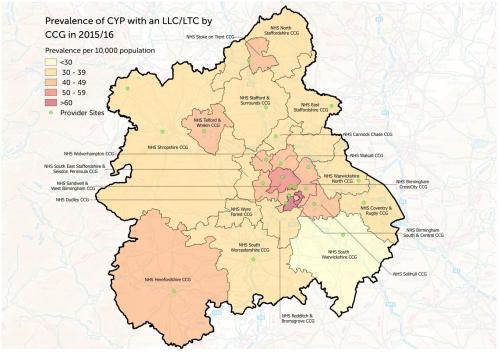
Palliative and End of Life Care Report for Children and Young People
Commissioned by NHS England, this report describes the the characteristics and levels of resource required by children and young people (CYP) (0-25

What works for primary care led integration?
We recently shared highlights from our realist synthesis on primary care-led integrated models, at the Health Policy and Planning Network workshop. Take a look at our presentation for a flavour of our findings ahead of publication later in the summer.

Want to have better access to general practice appointments?
Here’s how we can support practice staff to improve access.
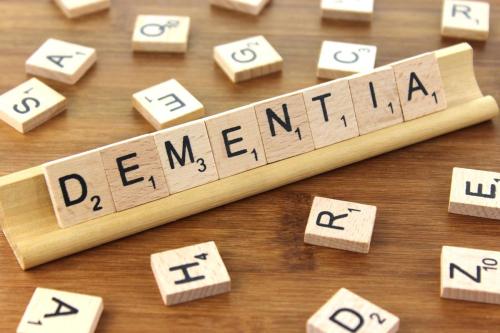
Changes in Dementia Incidence, Prevalence, Severity and Mortality
Dementia is a key priority for NHS England and is estimated to affect around 676,000 people in the country.
Making the Case for Integrating Mental and Physical Health Care - Full Report.
An analysis of the physical health of people who use mental health services: life expectancy, acute service use and the potential for
Referral management: rapid evidence scan
Aiming to inform the design of a new primary care-led model of care, this report summarises evidence on referral management.
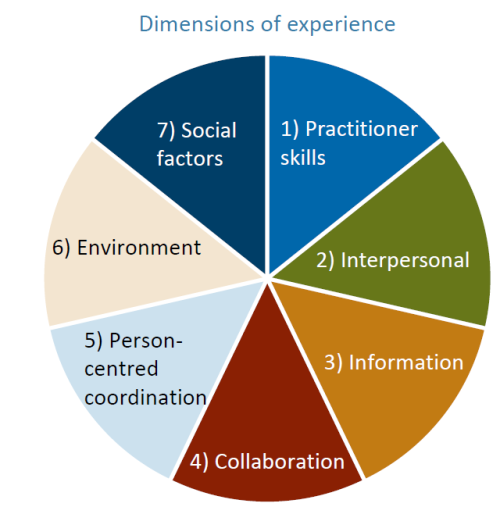
Review of patient reported measures for the MCP
Embedding PROMs and PREMs into Dudley's MCP Contract

Integrated care: rapid evidence scan
Exploring what integration can mean in different contexts, we have summarised evidence on effectiveness and cost effectiveness of integrated care, alongside lessons for implementation and considerations for measurement and evaluation.
Unplanned admissions: rapid evidence scan
Reducing unplanned admissions is a key priority for local health economies. This rapid evidence scan will help you to navigate the evidence base on various service interventions and their impact on unscheduled care.