Top Menu

  • GitHub
  • Midlands Analyst Network and Huddles
  • SU Insights
  • Sign up for updates
The Strategy Unit

Main navigation

  • About Us
  • Our work
  • Services
  • Contact
  • Training
  • GitHub
  • Midlands Analyst Network and Huddles
  • SU Insights
  • Sign up for updates
  1. Home

Our work

  • Show all
  • Better use of analysis and decision making
  • (-) System thinking and system working
  • Primary, community and social care services
  • Urgent and emergency care
  • Inequalities
  • Elective / planned care
  • Wider determinants of health and prevention
  • MDSN
  • Mental health
  • End of life
  • Specialised services
  • Addressing inequalities
  • Maternity services and child health
  • Left shift
  • COVID-19
  • (-) Evaluation
  • Models of care
  • Health and care programmes
  • (-) Show all
  • Learning and development
  • Futures thinking
  • Strategy development
  • Problem structuring
  • Evaluation and impact assessment
  • Complex modelling
  • Evidence reviews
  • Economic analysis
  • Comparative analysis
  • Options appraisal
  • Population mapping
  • (-) Show all
  • Blog post
  • Report
  • Long read
  • Tool
  • News
  • Podcast
  • Guide
  • (-) Show all
  • Abeda Mulla
  • Alison Turner
  • Andrew Jones
  • Andy Hood
  • Chris Beeley
  • Claire Maynard
  • Clare Humble
  • David Callaghan
  • David Frith
  • Fraser Battye
  • Jake Parsons
  • James de Lacy
  • James Sandy
  • Jonathan Spencer
  • Jon Cook
  • Josh Cook
  • Karen Bradley
  • Katie Davies
  • Lucy Morgan
  • Mahmoda Begum
  • Mike Woodall
  • Mohammed Amin Mohammed
  • Natasha Stephenson
  • Nigel Edwards
  • Paul Mason
  • Paul Seamer
  • Peter Spilsbury
  • Romaana Kapadi
  • Sally Thompson
  • Sheila Ali
  • Shiona Aldridge
  • Simon Bourne
  • Steven Wyatt
  • Strategy Unit
  • Zaheera Teladia
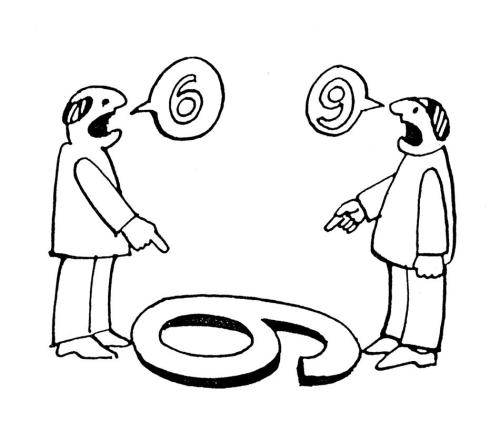
Two people stand on opposite sides of a number on the ground; one sees a 6, the other sees a 9, each pointing and stating their perspective.
Blog post 30/06/2026

Neighbourhoods and hospital activity: oh yes it can, oh no it can’t?

Simple, intuitive ideas don’t draw critical attention. They stroll about the policy world, untested and unscathed.

An anonymised NHS appointment letter lying on a wooden table, photographed from above with a visible fold crease and NHS logo.
News 29/06/2026

Improving the experience of waiting: the evidence behind new NHS minimum standards

New NHS patient experience minimum standards aim to improve how people experience waiting for elective care

red and blue ribbon twirls
10/06/2026

Improving perioperative flow: using simulation to understand elective care pathways

Why are operations still being cancelled on the day of surgery, despite long waiting lists and high demand? The answer often lies not in a single point of failure, but in how the perioperative pathway functions as a whole.

Colorful wooden Tetris-like blocks are stacked and scattered on a wooden surface with a green background.
Blog post 02/06/2026

Complex problems and Multi-Disciplinary Teams

Many moons ago, I was fortunate enough to observe a multi-disciplinary team (MDT) in Dudley.

A digitally illustrated, isometric view of an impossible staircase labyrinth inspired by M.C. Escher, rendered in a painterly style. Stone staircases loop and intersect in paradoxical, gravity-defying configurations within a deep stone structure. Several small human figures in colourful clothing are scattered across the staircases, appearing to walk in different directions. Vines and small plants grow along the upper edges of the walls, and the overall co
Blog post 14/05/2026

Failure demand as a route to success?

When we began looking at failure demand in the NHS, I assumed most of our time would be spent in familiar territory: productivity metr
emergency fire exit sign hanging from the ceiling
Long read 11/05/2026

Discharge before noon

Can data on discharge times help us to improve hospital flow?

Colorful watercolor brush stroke on transparent background
Blog post 06/05/2026

Adopting the Core20PLUS5 approach: different strokes for different folks?

This blog describes the headline findings from the first phase of the national evaluation of the Core20PLUS5 approach
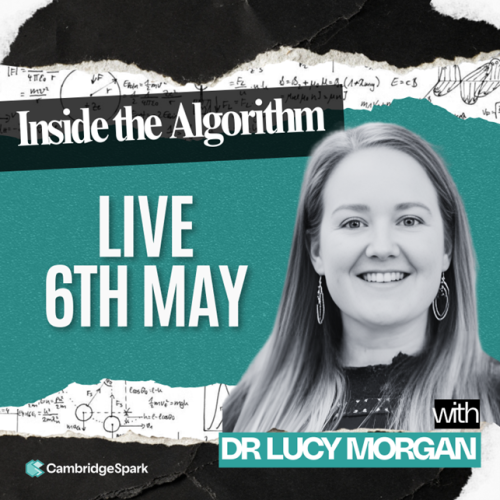
Dr Lucy Morgan smiling in front of a board of mathematical equations. Text reads “Inside the Algorithm with Dr Lucy Morgan, live 6th May"
News 05/05/2026

Why NHS models should be built to be reused

Our Head of Simulation, Dr Lucy Morgan, recently appeared on the new podcast Inside the Algorithm, hosted by Cambridg

Space shuttle rocket isolated on blue cyan background with copy space. Elements of this image furnished by NASA.
Blog post 29/04/2026

Neighbourhood health should not be judged (solely) by its ability to reduce hospital activity

In 1962, President John F. Kennedy arrived at NASA headquarters for a progress update on the planned trip to the moon.
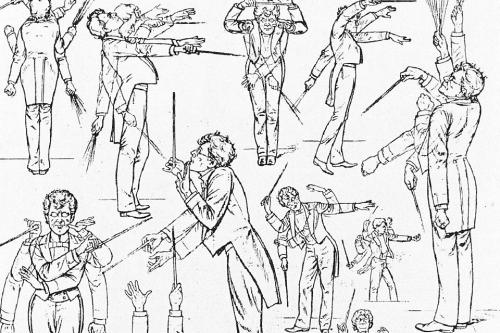
Caricature drawings satirising the conducting style of Gustav Mahler when he was director of the Vienna State Opera, 1897-1907
Blog post 15/04/2026

Commissioners as conductors?

Traditional NHS commissioning alone is not enough, and must be complemented by a “conductor” role that actively coordinates partners and drives system-wide change. Together, commissioners provide strategic direction while conductors enable delivery, which is essential for improving outcomes in complex health systems.

blue and pink string lights
Blog post 14/04/2026

Diagnosing the problems of non-diagnosis

Some descriptions of healthcare seem to be taken straight from the film Minority Report.

A Healthcare Worker Measuring a Patient's Blood Pressure Using a Sphygmomanometer
Long read 04/03/2026

Continuity in primary care: the safest bet we aren’t able to make?

In this long-read, which first appeared in the HSJ, Fraser Battye asks whether focusing on continuity might also improve access to primary care

hospital staff running down a corridor wearing masks and scrubs
Blog post 23/02/2026

What explains the recent growth in hospital activity?

In this long read, Fraser Battye describes our analysis of what has driven the growth in hospital activity.

Realistic office table cluttered with scattered calendars, colourful sticky notes, and overlapping handwritten plans, with coffee stains and multiple wall clocks showing different times.
Blog post 03/02/2026

The enduring ‘messy programme’ with ‘mixed results’

The diagram below shows me at my most cynical.

Impossible Stairway Maze
Blog post 09/10/2025

Making sense of failure demand in the NHS

I must be an unpleasant creature to share a room with. I snore. I smell. And I’m seemingly addicted to my way of doing things.
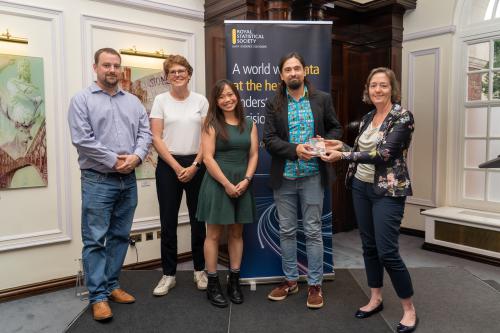
Sarah Cumbers (RSS) presenting Florence Nightingale Award to Strategy Unit staff Tom Jemmett, Jac Grout, YiWen Hon & Chris Beeley
News 16/07/2025

Strategy Unit demand model wins prestigious Florence Nightingale Award

Our open-source demand model, developed in collaboration with the New Hospital Programme, has been named the 2025 winner of the Florence Nightingale Award for Excellence in Health and Care Analytics.

Stock image showing big data visualisation: numbers 0 and 1 in coloured blocks
Blog post 09/04/2025

Transforming Hospital Planning with an Open-Source Demand and Capacity Model​

​​We are proud to announce the open-sourcing of a demand and capacity model, developed with the New Hospitals Programme, to transform NHS hospital planning with transparency, collaboration, and efficiency. ​

Image of shocked goose
Blog post 27/03/2025

‘Internal Consultancy’: INSIGHTS from evidence and experience

In this blog, our Head of Policy, Fraser Battye, shares his reflections on a recent ‘SU INSIGHTS’ event on the ‘Internal Consultancy’

Man wearing suit adjusting cuff
Blog post 11/03/2025

Are ‘Internal Consultancies’ a good option for the NHS?

Ahead of a SU INSIGHTS event on the topic, Fraser Battye, our Head of Policy suggests ways the NHS could make better use of consultancy support.

Image of female carer leaning over elderly female patient and holding her hand
Long read 05/03/2025

From ‘right drift’ to ‘left shift’?

Our Head of Policy, Fraser Battye, looks at the challenges facing the intention to shift care ‘from hospital to community’. He suggests that we have missed a critical part of the explanation for why this ‘left shift’ hasn’t taken place following previous initiatives.

Pagination

  • Next page Next
The Strategy Unit
NHS Logo

Quick Links

  • About Us
  • Our work
  • Contact
  • Cookies
  • Privacy
  • Accessibility statement

The Strategy Unit 

Copyright © 2025 | Website design by NHS Midlands and Lancashire / NHS Arden and Greater East Midlands.

Accessibility

100%
100%
Scroll to top