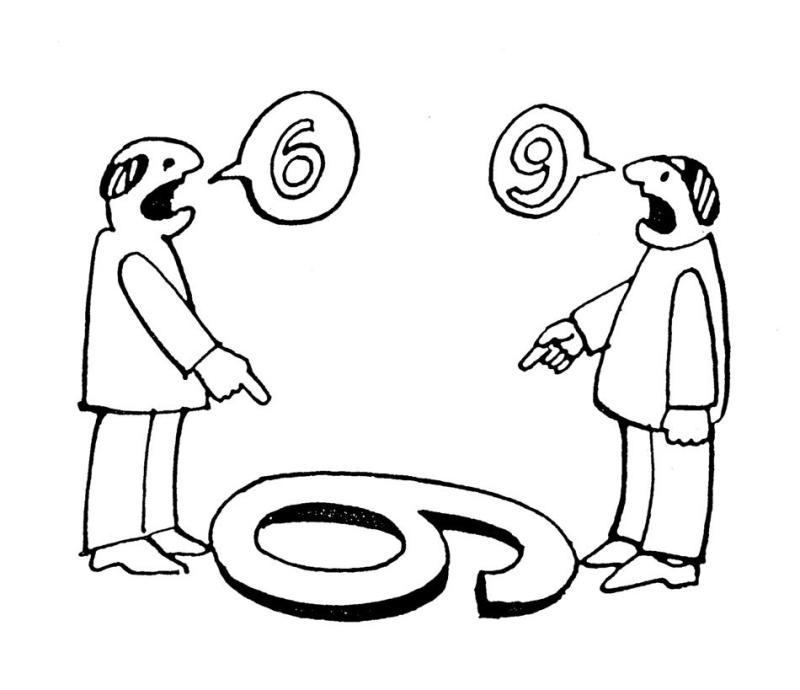
Simple, intuitive ideas don’t draw critical attention. They stroll about the policy world, untested and unscathed. And they can survive, unaltered, for decades.
One such idea is that increasing the supply of community-based services will reduce hospital-based activity. In differing guises, and to varying degrees, this has been a mainstay of policy for decades.
The 10 Year Plan, for example, says that:
“…we will increase the share of NHS resources spent in the community and decrease the share spent in hospital over the course of this plan…As we take demand pressures off hospitals, they will do less firefighting.”
The logic is simple and intuitive. And everyone has heard about the frail elderly person ‘who would have been admitted to hospital if we hadn’t…’. Neighbourhood health case studies burst with these examples.
There are consequently high expectations: neighbourhood health must lead to rapid reductions in hospital activity.
And yet. Resources are not flowing as policy suggests they should. Something doesn’t ring true. Perhaps Sir Jim Mackey voiced the underlying concern:
“What they [hospital leaders] are worried about is the money shifts but the patients don’t, which is what’s happened before…There’s been investment in things that didn’t actually prevent flowing into hospital, or not in a significant enough way…for it to be felt to have made a difference.”
We therefore seem to have two camps of thought:
- Camp 1 says that community-based services, coordinated within neighbourhoods, will reduce hospital activity.
- Camp 2 agrees that this might be true in theory; but worries that it won’t happen in practice.
The debate has many permutations. For example, each camp might argue that previous programmes:
- Haven’t been implemented rigorously. Insufficient join-up across silos; ‘pseudo-teams’ that look integrated on paper, but are separate services in practice: multiple operational problems have been documented.
- Haven’t been well targeted. A significant proportion of emergency admissions are amenable to better management upstream. We just need to make better use of data for targeting this time.
- Have been underpowered. Improved end-of-life care, better support to care homes, responsive community services, and properly joined-up social care: this is all good, we just need a much stronger dose of it. And we need to get into analytical detail: numbers needed to treat, (dis)economies of scale, system dynamics.
- Have been evaluated badly. Analytical problems abound. So do schemes which lacked a connection between evaluation and roll out (see risk stratification). And existing evaluative evidence does not inspire confidence on demand reduction.
Ok…but what is the answer? Can community-based services reduce demand? Or is this a non-answer to the very real problems of bursting hospitals, fried clinicians and unhappy patients? Which camp is right?
Having cautioned against simple and intuitive ideas, you won’t expect a simple and intuitive answer. Even then, our answer may sound wilful and paradoxical.
Because both camps are right…and both camps are wrong.
Both camps are right
There is evidence to suggest that community health services:
- Halve the risk of hospitalisation.
- Make no difference at all to hospitalisation.
This is the conclusion of health economist, Dr Rachel Meacock. She and colleagues at University of Manchester have been studying the relationship between adult community health services and hospital use.
In an excellent summary, Meacock shows that the first statement is true for individuals and specific cohorts. And the second is true at the overall system level. We can see large effects for individuals, but not for populations.
Both camps are right. But how?
We can answer this by asking: if a neighbourhood model frees up capacity, what does the hospital then do with it? It will probably be filled.
Consider a hard-pressed medical registrar facing a judgment call on a patient that might be able to go home. Imagine that the patient is already undressed, it is getting late, and arranging home care is complex. The alternative — admit overnight and review on the post-take ward round — is quicker, manages clinical risk, and offloads the social complexity onto tomorrow’s team. We know that decisions to admit are not solely determined by clinical risk, so which decision is more likely?
Unless capacity is actively controlled by senior decision-makers, who can avoid the perils of ‘what-if’ medicine - and unless ward and ED staff have support to access alternatives to admission – then any spaces freed-up by neighbourhood services will be filled-up by patients who would previously have been managed differently. Especially in a pressured system with few beds.
Managing this is fiendishly tricky. Admission thresholds – investigated both by Meacock and the Strategy Unit – will form at least part of the answer. Forthcoming Strategy Unit work suggests that thresholds can be shown for individual hospitals. Maybe this is one way in?
But one thing is clear: community-based services cannot reduce overall demand without the active participation of hospitals. This is a system-wide endeavour.
Both camps are wrong
Stepping back, perhaps both camps are looking for the wrong thing in the wrong place? Perhaps the debate is misconceived?
Certainly, if reducing hospital activity is the aim, then there are more direct and faster-acting policy levers than neighbourhood health. Capacity management, demand control, payment redesign, direct workforce shifts: all act on activity more quickly and more measurably than community team development.
We might also ask: what really drives hospital activity? Rather than looking to demand reduction, we might acknowledge that much of the long-run growth in hospital activity is driven by the advances of medical science. More diagnostics, more interventions, more conditions that can be treated. Hospital activity causes hospital activity. Why not address this activity at source?
Then there is a further interesting argument hiding underneath the activity-reduction frame. Healthcare services are, mostly, in the business of health outcomes. Isn’t this how neighbourhood health should be judged, however hard it is to measure? By its value for the health of the population, the experience of patients and staff, the efficiency and coherence of local services (etc)?
Activity reduction may be part of the mix, but it is just that: a part. This opens a much richer conception of neighbourhood health. And it frees it from being judged by effects largely outside of its control.
This logic could lead to radicalism. If, perhaps having learnt some lessons from previous efforts, Integrated Care Boards allocate resources according to potential health gain, then we would see a significantly reshaped care system.
As another health economist, Andi Orlowski, wrote recently:
“The NHS does not need another hunt for mythical savings. It needs an adult conversation about value.”
Simple, intuitive ideas would not survive that conversation unscathed.
This article originally featured in the Health Service journal: Reducing hospital demand is not the right test for neighbourhood care