
Emergency Departments worked better during the strikes. But why?
New research published in the Journal of the Royal Society of Medicine explores why emergency departments worked better during strikes.

The hidden challenge at the heart of the 10-year plan
A new tool exploring why hospital bed pressure is increasing and what this could mean for future NHS capacity planning.

New Medicine Service and Personal Health Costs Evaluation
Evaluation of the community pharmacy-based New Medicine Service and Personal Health Costs intervention.

A new tool to help systems to deliver the left shift
Our new tool to help systems explore opportunities to reduce hospital care.
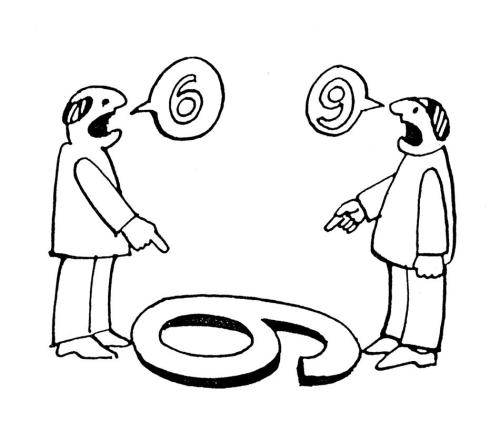
Neighbourhoods and hospital activity: oh yes it can, oh no it can’t?
Simple, intuitive ideas don’t draw critical attention. They stroll about the policy world, untested and unscathed.

Improving the experience of waiting: the evidence behind new NHS minimum standards
New NHS patient experience minimum standards aim to improve how people experience waiting for elective care

Exploring cultural adaptations in dementia care: our work with the NHS Race and Health Observatory
Understanding what it takes to deliver culturally responsive dementia care.

Improving perioperative flow: using simulation to understand elective care pathways
Why are operations still being cancelled on the day of surgery, despite long waiting lists and high demand? The answer often lies not in a single point of failure, but in how the perioperative pathway functions as a whole.

What Helps People Stay in NHS Talking Therapies? Insights from Services
How NHS Talking Therapies services are improving engagement through clearer expectations, flexible access and stronger support, and what further action could enhance recovery for more people.

Adopting the Core20PLUS5 approach: different strokes for different folks?
This blog describes the headline findings from the first phase of the national evaluation of the Core20PLUS5 approach

Why NHS models should be built to be reused
Our Head of Simulation, Dr Lucy Morgan, recently appeared on the new podcast Inside the Algorithm, hosted by Cambridg

Neighbourhood health should not be judged (solely) by its ability to reduce hospital activity
In 1962, President John F. Kennedy arrived at NASA headquarters for a progress update on the planned trip to the moon.

Continuity in primary care: the safest bet we aren’t able to make?
In this long-read, which first appeared in the HSJ, Fraser Battye asks whether focusing on continuity might also improve access to primary care

What explains the recent growth in hospital activity?
In this long read, Fraser Battye describes our analysis of what has driven the growth in hospital activity.

The enduring ‘messy programme’ with ‘mixed results’
The diagram below shows me at my most cynical.

Planning for rising renal demand: simulating capacity across the care system
Demand for kidney replacement therapy is rising, and current capacity will not be sufficient over the next decade. This work uses simulation modelling to help systems understand future pressures and test potential responses.

Beating the backlog: Meeting the waiting list challenge
The NHS waiting list in England must halve to reach waiting time targets.

The Strategy Unit contribution to neighbourhood health
Our role in supporting the national effort to turn the vision of neighbourhood health into action by providing evidence, analysis and insight.

A fairer funding future for general practice: lessons from Leicester, Leicestershire and Rutland ICB
Our evaluation of the Health Equity Payment (HEP) scheme in Leicester, Leicestershire and Rutland highlights how flexible, needs-based GP funding can support more equitable care.

Heart Failure Targeted Funding Programme 2023/24 Evaluation
The Heart Failure Targeted Funding Programme was an NHS England initiative to improve access to heart failure specialists in the commu