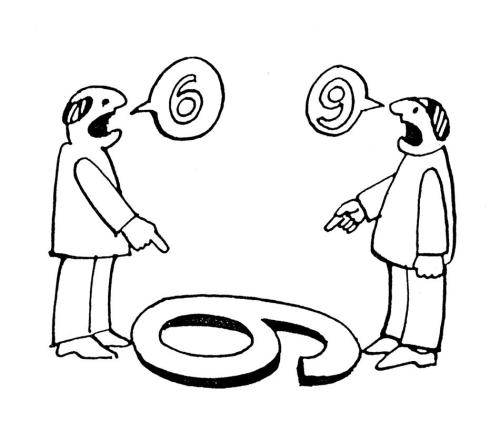
Neighbourhoods and hospital activity: oh yes it can, oh no it can’t?
Simple, intuitive ideas don’t draw critical attention. They stroll about the policy world, untested and unscathed.

Improving perioperative flow: using simulation to understand elective care pathways
Why are operations still being cancelled on the day of surgery, despite long waiting lists and high demand? The answer often lies not in a single point of failure, but in how the perioperative pathway functions as a whole.

Complex problems and Multi-Disciplinary Teams
Many moons ago, I was fortunate enough to observe a multi-disciplinary team (MDT) in Dudley.

Failure demand as a route to success?
When we began looking at failure demand in the NHS, I assumed most of our time would be spent in familiar territory: productivity metr

Discharge before noon
Can data on discharge times help us to improve hospital flow?

Adopting the Core20PLUS5 approach: different strokes for different folks?
This blog describes the headline findings from the first phase of the national evaluation of the Core20PLUS5 approach

Neighbourhood health should not be judged (solely) by its ability to reduce hospital activity
In 1962, President John F. Kennedy arrived at NASA headquarters for a progress update on the planned trip to the moon.
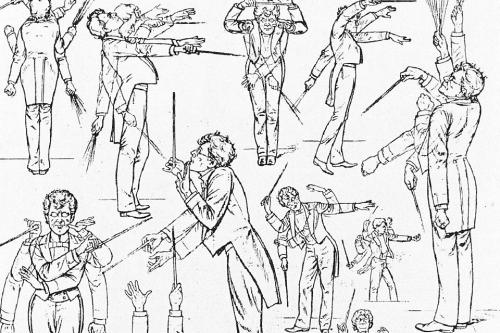
Commissioners as conductors?
Traditional NHS commissioning alone is not enough, and must be complemented by a “conductor” role that actively coordinates partners and drives system-wide change. Together, commissioners provide strategic direction while conductors enable delivery, which is essential for improving outcomes in complex health systems.

Diagnosing the problems of non-diagnosis
Some descriptions of healthcare seem to be taken straight from the film Minority Report.

Continuity in primary care: the safest bet we aren’t able to make?
In this long-read, which first appeared in the HSJ, Fraser Battye asks whether focusing on continuity might also improve access to primary care

What explains the recent growth in hospital activity?
In this long read, Fraser Battye describes our analysis of what has driven the growth in hospital activity.

The enduring ‘messy programme’ with ‘mixed results’
The diagram below shows me at my most cynical.

Heart Failure Targeted Funding Programme 2023/24 Evaluation
The Heart Failure Targeted Funding Programme was an NHS England initiative to improve access to heart failure specialists in the commu

Making sense of failure demand in the NHS
I must be an unpleasant creature to share a room with. I snore. I smell. And I’m seemingly addicted to my way of doing things.

Hydration, UTIs and older people: learning from NHS pilots about how to improve care
Our evaluation of hydration-focused interventions for older people found promising signs of impact and highlighted the practical and systemic challenges of delivering and sustaining change.
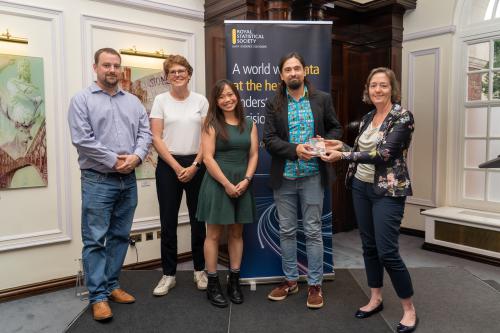
Strategy Unit demand model wins prestigious Florence Nightingale Award
Our open-source demand model, developed in collaboration with the New Hospital Programme, has been named the 2025 winner of the Florence Nightingale Award for Excellence in Health and Care Analytics.

Transforming Hospital Planning with an Open-Source Demand and Capacity Model
We are proud to announce the open-sourcing of a demand and capacity model, developed with the New Hospitals Programme, to transform NHS hospital planning with transparency, collaboration, and efficiency.

‘Internal Consultancy’: INSIGHTS from evidence and experience
In this blog, our Head of Policy, Fraser Battye, shares his reflections on a recent ‘SU INSIGHTS’ event on the ‘Internal Consultancy’

Are ‘Internal Consultancies’ a good option for the NHS?
Ahead of a SU INSIGHTS event on the topic, Fraser Battye, our Head of Policy suggests ways the NHS could make better use of consultancy support.

From ‘right drift’ to ‘left shift’?
Our Head of Policy, Fraser Battye, looks at the challenges facing the intention to shift care ‘from hospital to community’. He suggests that we have missed a critical part of the explanation for why this ‘left shift’ hasn’t taken place following previous initiatives.