Discharged without a diagnosis
In 2023/24, one million people who were admitted to an NHS hospital in an emergency, were later discharged without a diagnosis. This long-read examines what this means for patients and providers.

Continuity in primary care: the safest bet we aren’t able to make?
In this long-read, which first appeared in the HSJ, Fraser Battye asks whether focusing on continuity might also improve access to primary care

What explains the recent growth in hospital activity?
In this long read, Fraser Battye describes our analysis of what has driven the growth in hospital activity.

A journey into intersectionality
A practical exploration of intersectionality, testing theory through quantitative analysis of hospital readmissions.

The enduring ‘messy programme’ with ‘mixed results’
The diagram below shows me at my most cynical.

Planning for rising renal demand: simulating capacity across the care system
Demand for kidney replacement therapy is rising, and current capacity will not be sufficient over the next decade. This work uses simulation modelling to help systems understand future pressures and test potential responses.
From Ethical AI to NHS Modelling: Insights from our data science internship
The Strategy Unit is proud to support early-career analysts that help widen access to data science and strengthen diversity in the fie

Death (and taxes?)
Hospices are fundamental to end of life care, and the broader shift ‘from hospital to community’.

Beating the backlog: Meeting the waiting list challenge
The NHS waiting list in England must halve to reach waiting time targets.

The Strategy Unit contribution to neighbourhood health
Our role in supporting the national effort to turn the vision of neighbourhood health into action by providing evidence, analysis and insight.

A fairer funding future for general practice: lessons from Leicester, Leicestershire and Rutland ICB
Our evaluation of the Health Equity Payment (HEP) scheme in Leicester, Leicestershire and Rutland highlights how flexible, needs-based GP funding can support more equitable care.

Making sense of failure demand in the NHS
I must be an unpleasant creature to share a room with. I snore. I smell. And I’m seemingly addicted to my way of doing things.

The decline in care continuity is not inevitable
Relational continuity of care, the extent to which patients have an ongoing relationship with a specific clinician in their GP practice, is perhaps

Expectations: The hidden driver of healthcare demand
How well do we understand changing expectations and implications for the NHS?

A missing element in ‘shifting care’
Our Director, Peter Spilsbury, outlines the scale of the task when it comes to making ‘the shift from hospital to community’.
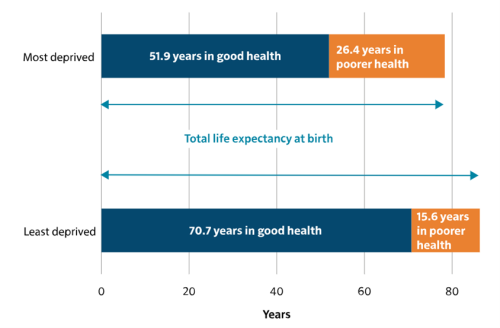
Things can only get better (?)
Introducing a new online tool to help local health and care service planners think differently about healthy ageing.

Transforming Hospital Planning with an Open-Source Demand and Capacity Model
We are proud to announce the open-sourcing of a demand and capacity model, developed with the New Hospitals Programme, to transform NHS hospital planning with transparency, collaboration, and efficiency.

‘Internal Consultancy’: INSIGHTS from evidence and experience
In this blog, our Head of Policy, Fraser Battye, shares his reflections on a recent ‘SU INSIGHTS’ event on the ‘Internal Consultancy’

Are ‘Internal Consultancies’ a good option for the NHS?
Ahead of a SU INSIGHTS event on the topic, Fraser Battye, our Head of Policy suggests ways the NHS could make better use of consultancy support.

From ‘right drift’ to ‘left shift’?
Our Head of Policy, Fraser Battye, looks at the challenges facing the intention to shift care ‘from hospital to community’. He suggests that we have missed a critical part of the explanation for why this ‘left shift’ hasn’t taken place following previous initiatives.