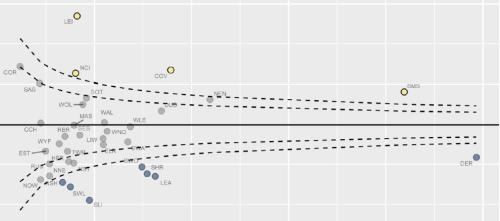
Equity and Cost Growth in Specialised Services
NHS specialised services provide care for people with complex or rare medical conditions.
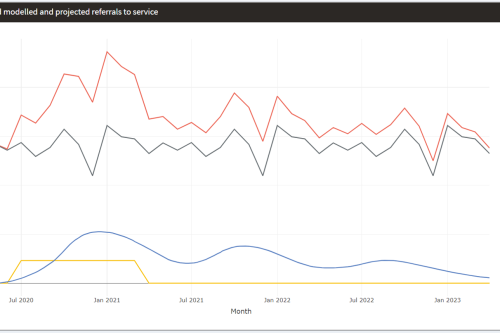
Mental Health Surge Model
Early in the Covid pandemic, it became clear that people’s mental health would suffer. Whether through bereavement, unemployment, social isolation, not being able to access support services – or a host of other routes – an alarming picture began to emerge and attract attention.
COVID-19: breaking the cycle of deprivation and ill health
Promoting whole-system action on the wider determinants of healthy life expectancy in the shadow of the COVID-19 pandemic
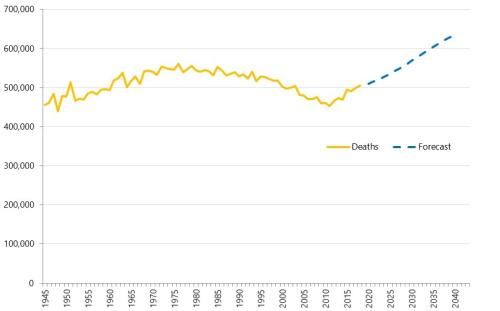
Health service use in the last two years of life
Health and care services get just one opportunity to support people at the end of their life. When this support is compassionate and appropriate, unnecessary suffering can be avoided and grieving can be eased. When this is not the case, harm and distress can result. The difference in these experiences can be profound.

Socio-economic and environmental impact of Herefordshire and Worcestershire STP
Anchor institutions are large, typically non-profit, public sector organisations whose long-term sustaina
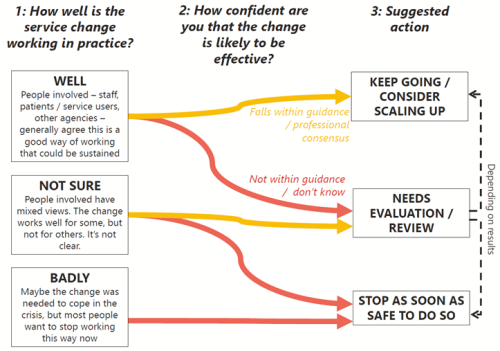
How can we learn from changes in practice under COVID-19
During the COVID-19 pandemic we have seen rapid changes in ways of working.

Accessibility of perinatal mental health services for women from Ethnic Minority groups
Barriers to accessing mental health care during pregnancy and the first postnatal year (perinatal period) seem to be greater for ethnic minority women.
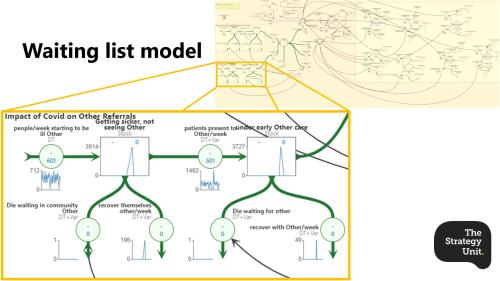
Modelling the impact of covid on waiting lists for planned care
Working with the national collaboration to coordinate covid-related analysis, and the NHSE/I Midlands region, the Strategy Unit has produced a ‘systems dynamics’ model of waiting lists for planned care. The model is freely available for non-commercial use across the NHS. Here, Steven Wyatt and Mike Woodall explain what we did and how we did it.

Primary and Community Qualitative Insights
The COVID-19 response required rapid change and innovation across health and care.
How can Integrated Care Systems collect and use more ‘person-centred intelligence’?
Working with our partners
Outcomes based commissioning: A framework for local decision making
This local decision-making framework aims to empower systems as they look to design new contracting approaches aimed at improving outcomes.
Midlands Population Health Management Academy
The Midlands Population Health Management Academy was part of a programme of support, commissioned by NHS
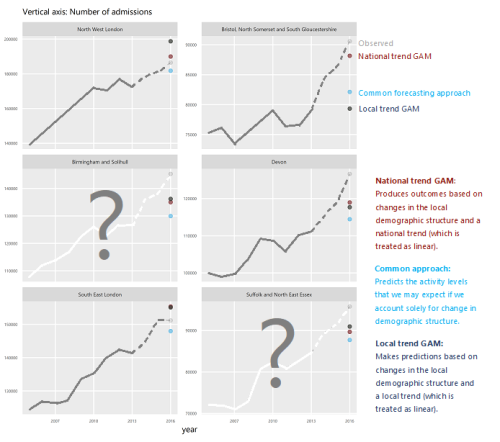
How will we know if Integrated Care Systems reduce demand for urgent care?
The implications of a blended payment system are far reaching: Decisions about planned activity levels will determine the total funding envelope for urgent care within a system and will influence the behaviour of healthcare providers and the services they deliver to patients.
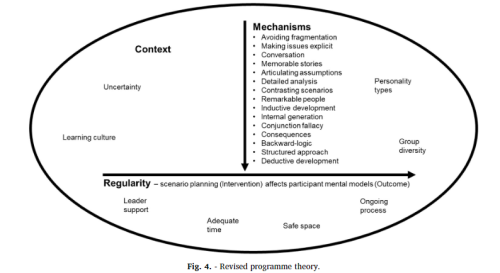
Opening the ‘black box’ of scenario planning through realist synthesis
Scenario planning is recognised as an effective aid to strategic planning in complex, uncertain conditions. It is an approach that the Strategy Unit is increasingly building into its work with health and care systems and third sector organisations.
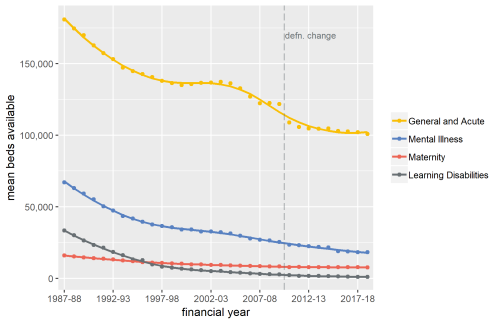
Exploring Mental Health Inpatient Capacity
This report explores the pressures on inpatient mental health services across Sustainability and Transformation Partnerships in England, drawing on a wide range of datasets, published research and interviews with staff working on mental health services. The report was commissioned by and includes a response from the Royal College of Psychiatrists.
Lessons, Evaluation and Learning from the Dudley MCP
Learning from Dudley MCP
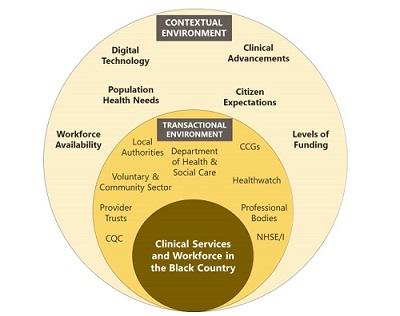
Clinical Workforce Scenarios for the Black Country
The future is highly uncertain.
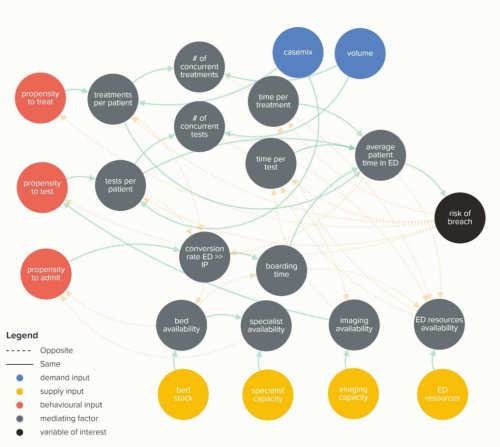
Waiting Times and Attendance Durations at English A&E Departments
In March 2019, NHS England is expected to report the outcome of its review of constitutional waiting times targets. This report reviews the factors that have led to the decline in performance against one of these targets - the 4-hour target for Accident and Emergency Departments. The analysis uncovers new insights and has the potential to reshape received wisdom about the performance of A&E departments, carrying important implications for healthcare policy and system leadership.
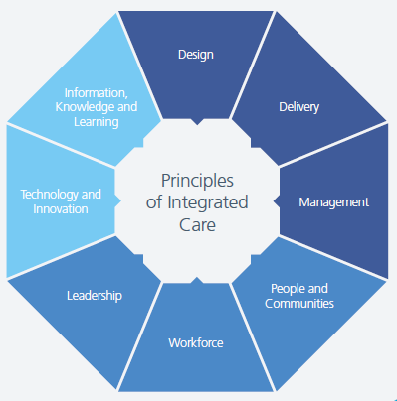
New care models - what's the evidence
High level findings from a series of evidence reviews on new care models.
The Potential Economic Impact of Virtual Outpatient Appointments in the West Midlands: A scoping study
The Strategy Unit was recently approached to examine the case for a shift from traditional outpatient services to the use of virtual a