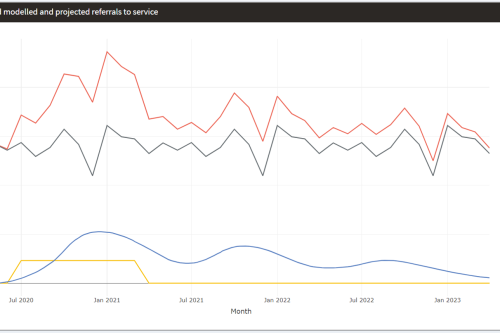
Mental Health Surge Model
Early in the Covid pandemic, it became clear that people’s mental health would suffer. Whether through bereavement, unemployment, social isolation, not being able to access support services – or a host of other routes – an alarming picture began to emerge and attract attention.
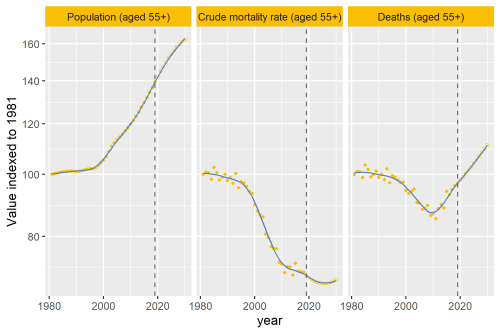
Why are deaths set to rise?
In our recent analysis of healthcare use in the last 2 years of life, we point out an important change that’s taking place to life and death in the UK.
COVID-19: breaking the cycle of deprivation and ill health
Promoting whole-system action on the wider determinants of healthy life expectancy in the shadow of the COVID-19 pandemic

Making sense of evidence
It's time to celebrate World Evidence-Based Healthcare (EBHC) Day. In a world dominated by COVID-19 and the associated infodemic, this day arguably has more resonance. Closer to home, EBHC Day also coincides with our Insight 2020 festival and the launch of the Midlands Decision Support network. What better opportunity to ask, 'what does evidence-informed decision making actually mean'?
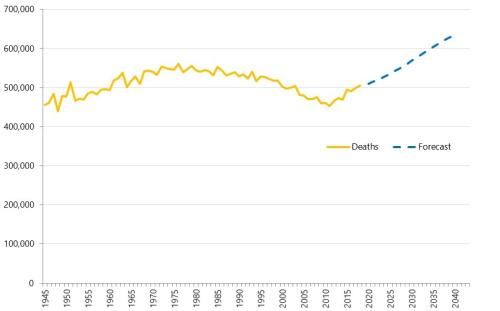
Health service use in the last two years of life
Health and care services get just one opportunity to support people at the end of their life. When this support is compassionate and appropriate, unnecessary suffering can be avoided and grieving can be eased. When this is not the case, harm and distress can result. The difference in these experiences can be profound.

Socio-economic and environmental impact of Herefordshire and Worcestershire STP
Anchor institutions are large, typically non-profit, public sector organisations whose long-term sustaina
Insight 2020 - Week 6: Making the most of our decision-making resources
The final week’s theme was a reflection on what had been heard in the previous weeks.We thoug
Insight 2020 - Week 5: The decision-making toolkit
Decision-making is an art; we can train at it, rehearse and access tools to support us.
Insight 2020 - Week 4: Exploring Health Inequalities
COVID-19 has shone a light on health inequalities; it has “laid bare our longstanding social, economic and political inequalities…” (BMJ,
Insight 2020 - Week 3: Analytical priorities of the Decision Support Network
The Midlands Decision Support Unit Network has defined its analytical priorities for 20/21.
Insight 2020 - Week 2: The role of the Decision Support Network
The Midlands Decision Support Unit (DSU) Network is a new and emerging approach to bring together analytical resource a
Insight 2020 - Week 1: Our decision making context in 2020
Transformation in health and care has been rapid and intensive, particularly in 2020.
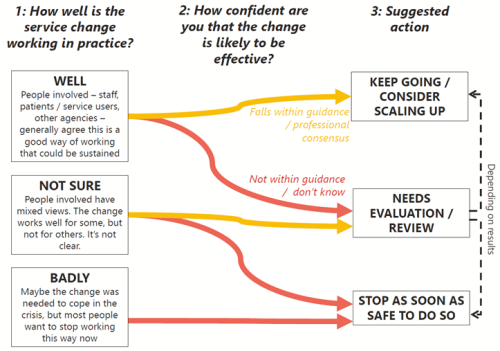
How can we learn from changes in practice under COVID-19
During the COVID-19 pandemic we have seen rapid changes in ways of working.

Accessibility of perinatal mental health services for women from Ethnic Minority groups
Barriers to accessing mental health care during pregnancy and the first postnatal year (perinatal period) seem to be greater for ethnic minority women.
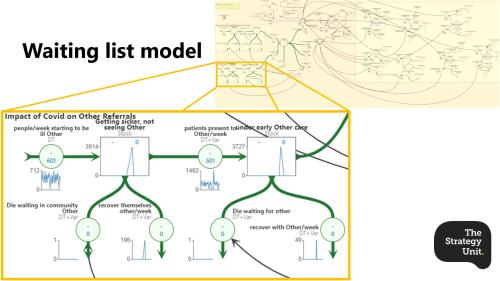
Modelling the impact of covid on waiting lists for planned care
Working with the national collaboration to coordinate covid-related analysis, and the NHSE/I Midlands region, the Strategy Unit has produced a ‘systems dynamics’ model of waiting lists for planned care. The model is freely available for non-commercial use across the NHS. Here, Steven Wyatt and Mike Woodall explain what we did and how we did it.

Bringing NHS analytics into the 21st Century
A marriage usually needs (at least): a matchmaker, two entities, a (little) money, a proposal and a home.

Primary and Community Qualitative Insights
The COVID-19 response required rapid change and innovation across health and care.
How can Integrated Care Systems collect and use more ‘person-centred intelligence’?
Working with our partners
Outcomes based commissioning: A framework for local decision making
This local decision-making framework aims to empower systems as they look to design new contracting approaches aimed at improving outcomes.
Midlands Population Health Management Academy
The Midlands Population Health Management Academy was part of a programme of support, commissioned by NHS