
Insight 2022 - Day 1 - ICSs working together to be intelligence-led organisations: lessons from history
ICSs working together to be intelligence-led organisations: lessons from historyHow can Integrated Care Systems (ICS

What are the ethical challenges in addressing inequities?
Produced by Angie Hobbs - the world’s first Professor in the Public Understanding of Philosophy – this paper examines the ethical questions raised by our report outlining strategies for reducing inequity.

Helping ICSs to reduce inequalities in access to planned care
Are there inequalities in access to planned care? If so, what are they? Which groups ‘gain’ and which groups suffer? And what could be done to address any inequalities? In pursuing their objective of reducing inequalities, what could Integrated Care Systems (ICSs) do? What strategies and approaches are likely to be successful?

What matters when waiting? – involving the public in NHS waiting list prioritisation
As the NHS emerged out of the pandemic, it was confronted with the challenge of not only recovery of unprecedented waiting lists, but with inequalities which required attention. NHS leaders challenged providers to restore inclusively and at University Hospitals Coventry and Warwickshire NHS Trust, we have developed a way of doing just that, whilst simultaneously reducing waiting times for all.

What was the question again?
We hear a lot about what’s stopping the NHS making the most of its army of talented analysts. Some say we just need more data, or data of better quality. Others point to deficiencies in our infrastructure, IT kit or the software we use. But I’m not so sure. For me the biggest shortfall is in good questions that we can feasibly address.

Inequalities in access to healthcare - what’s our next move?
Our research, published in the Lancet Regional Health Europe, highlights substantial inequities in access to elective hip replacement surgery. We found no evidence that these inequities reduced between 2006 and 2016.
‘Might’ is right
A good idea can be ruined by over-selling.

Strategies to reduce inequalities in access to planned hospital procedures
UPDATE 10th August: Now including briefing note for Integrated Care Boards on legal duties in respect of reducing inequalities. This report guides ICBs through the process.

We saw them before they were famous: reflections on AphA’s away day
In June 1976, the Sex Pistols played Manchester's Lesser Free Trade Hall.

Appointing an ICS ‘Chief Analyst’
The Strategy Unit has, over the last ten years, developed a way of working that has allowed us to become recognised as a leading analytical organisation in the NHS.

Bringing patient flow modelling into general practice
With general practice appointments hitting the highest numbers on record (34.8 million in England alone in November 2021), careful organisation and planning for patient appointments is increasingly important.

Autism evidence scan identifies knowledge gaps
Diagnosing autism takes account of a person’s differences in social interaction and communication, sensory sensitivity, interests and behaviours. Yet autism varies hugely from person to person, both in how it looks and how it is experienced.
Treating people on waiting lists: who decides what is fair?
Waiting lists for elective care are in the news. The national plan has been issued, with the expectation that lists will continue to rise for some years - and that long waiting will not disappear anytime soon. Addressing this ‘backlog’ will remain a fundamental challenge for some time to come.

Decision makers can make much better use of analysis
Part of the Strategy Unit mission is to improve the use of analysis in decision making. Current use is, to employ a euphemism, variable.

The Intellectual Forum: a source of fresh perspectives on decision making
The literature on decision making is like a disaster movie highlights reel. Barely has one calamity registered before another serious misstep takes its place. Case study after case study flashes past, each with its own lessons and warnings.

Advancing the analytical capability of the NHS and its ICS partners
The Strategy Unit were asked by the Strategy and Development Team in the Directorate of the Chief Data and Analytics Officer, NHSE/I, to make recommendations for advancing analytical capability across the health and care workforce.

Securing the future of domiciliary care
The Strategy Unit is embarking on an exciting project with WM ADASS, the Association of Directors of Adult Social Care Services in the West Midlands to explore the challenges facing domiciliary care and the opportunities that exist to transform and improve the service.

Strategy Unit devises a new method for classifying outpatient appointments
The number of outpatient attendances in England is now approaching 100 million each year.

Decisions to admit patients are not solely determined by clinical risk
Whether or not to admit a patient is one of the most routine yet important decisions a doctor in an Emergency Department
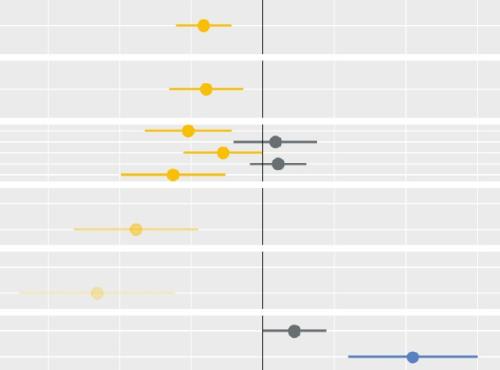
Socio-economic inequalities in access to planned hospital care: causes and consequences
Tacking inequalities in health is a long-standing NHS policy objective. Variation in the experiences and outcomes of different communities during the COVID-19 pandemic served to bring this issue back into focus.