
Strengthening ethnicity data across the NHS: developing the national improvement plan
Our analysis and stakeholder engagement supported NHS England to develop the national Ethnicity Recording Improvement Plan.

10-Year Productivity Forecast for the English NHS: An Expert Elicitation Study
Expert elicitation exercise commissioned by and in collaboration with the Health Foundation has produced forecasts of NHS productivity rates over the next 10 years.

A missing element in ‘shifting care’
Our Director, Peter Spilsbury, outlines the scale of the task when it comes to making ‘the shift from hospital to community’.

Strategy Unit demand model wins prestigious Florence Nightingale Award
Our open-source demand model, developed in collaboration with the New Hospital Programme, has been named the 2025 winner of the Florence Nightingale Award for Excellence in Health and Care Analytics.

Are there any non-technical ‘rules of thumb’ for assessing the quality of analysis?
The report below is from a short project that explored a simple set of questions:

Our role in the New Hospital Programme
Learn how the Strategy Unit’s innovative model is transforming hospital planning by providing a consistent, data-driven approach to forecast future demand and evidence-based decision making.
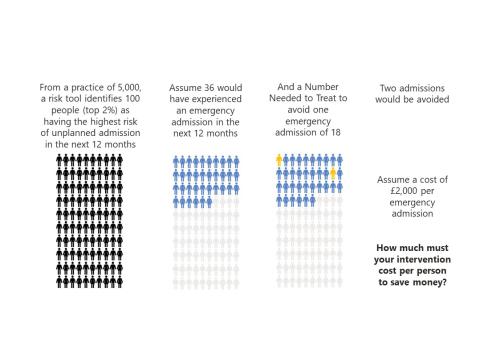
‘To risk stratify or not risk stratify, that is the question’ (At least, it should be)
Risk stratification tools are ubiquitous in healthcare. The concept is simple and seductive.

What are the downsides of digital?
What are the downsides of digital?
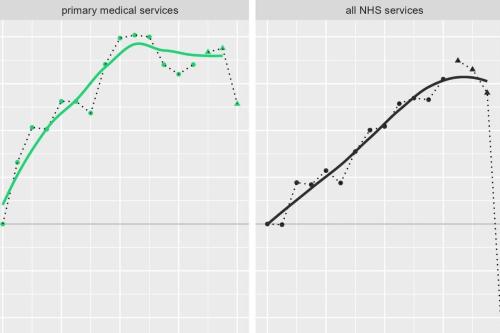
MDSN: GP practice productivity, efficiency, and continuity of care
GP Practice productivity, efficiency, and continuity of care
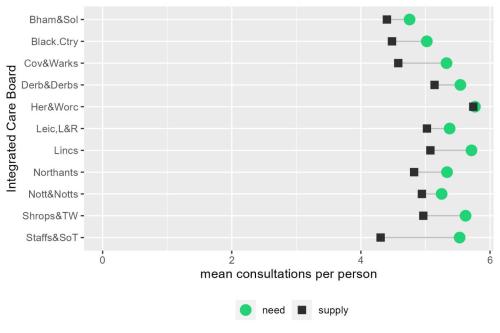
MDSN: The gap between need and supply of GP practice consultations
The gap between need and supply of GP practice consultations
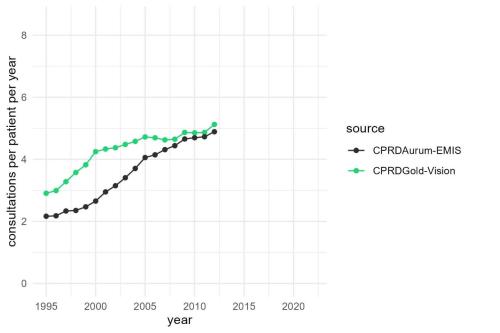
MDSN: Long-term trends in GP practice Consultation Rates
GP practice consultations are, by some distance, the most common interaction between the NHS and the population it serves.

A Picture of End-of-Life Care in England
Working with Macmillan our analysis investigates who is more likely to experience poor outcomes associated with shortcomings in end-of-life care? Are there particular areas in England where those at end-of-life face significant challenges and how might the supply of services in an area be influencing these?

A collaborative partnership with the Health Foundation
The Strategy Unit is collaborating with the Health Foundation to help address key health and social care issues by combining our expertise in data analysis.

How is growth in diagnostic testing affecting the hospital system?
Diagnostic services, such as medical imaging, endoscopy, and pathology, have grown substantially in recent years and at a faster rate than most other healthcare services. Increased diagnostic testing brings benefits to patients, but rapid growth of this service area within a complex, adaptive system such as the NHS is likely to have had unintended consequences. Midlands ICBs wanted to understand the impact of diagnostic growth on hospital services.

What are the ethical challenges in addressing inequities?
Produced by Angie Hobbs - the world’s first Professor in the Public Understanding of Philosophy – this paper examines the ethical questions raised by our report outlining strategies for reducing inequity.

Appointing an ICS ‘Chief Analyst’
The Strategy Unit has, over the last ten years, developed a way of working that has allowed us to become recognised as a leading analytical organisation in the NHS.

Autism evidence scan identifies knowledge gaps
Diagnosing autism takes account of a person’s differences in social interaction and communication, sensory sensitivity, interests and behaviours. Yet autism varies hugely from person to person, both in how it looks and how it is experienced.

Advancing the analytical capability of the NHS and its ICS partners
The Strategy Unit were asked by the Strategy and Development Team in the Directorate of the Chief Data and Analytics Officer, NHSE/I, to make recommendations for advancing analytical capability across the health and care workforce.

Strategy Unit devises a new method for classifying outpatient appointments
The number of outpatient attendances in England is now approaching 100 million each year.