
Are there any non-technical ‘rules of thumb’ for assessing the quality of analysis?
The report below is from a short project that explored a simple set of questions:

Transforming Hospital Planning with an Open-Source Demand and Capacity Model
We are proud to announce the open-sourcing of a demand and capacity model, developed with the New Hospitals Programme, to transform NHS hospital planning with transparency, collaboration, and efficiency.

‘Internal Consultancy’: INSIGHTS from evidence and experience
In this blog, our Head of Policy, Fraser Battye, shares his reflections on a recent ‘SU INSIGHTS’ event on the ‘Internal Consultancy’

Are ‘Internal Consultancies’ a good option for the NHS?
Ahead of a SU INSIGHTS event on the topic, Fraser Battye, our Head of Policy suggests ways the NHS could make better use of consultancy support.

Charisma
In this long read, which first appeared in the HSJ, Fraser Battye - our Head of Policy – looks at the role of charisma and innovation in the way that NHS resources are allocated.
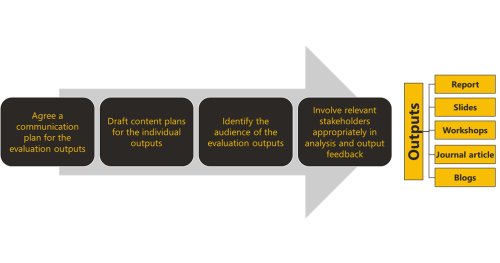
Our collective responsibility to share evaluation findings
The Strategy Unit is increasingly being commissioned to undertake evaluations on the pre
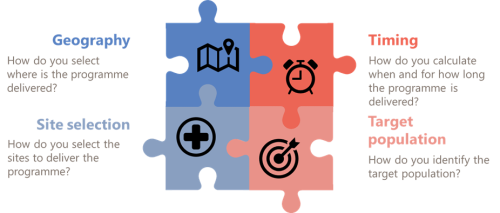
Why can’t I prove my programme is effective?
Evaluation blog series continues with Impact Evaluation Lead Mike Woodall looking at how programme designers can maximise the chances of success.

The merry-go-round of evaluation recommendations
A blog series and short reports sharing how to design projects to best support evaluation.
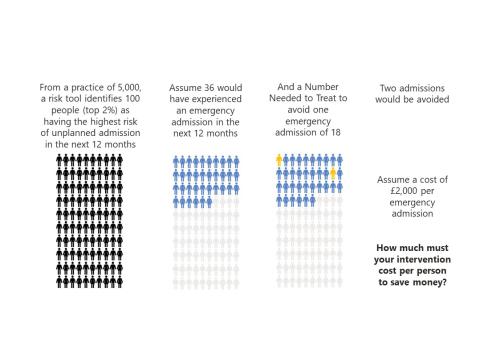
‘To risk stratify or not risk stratify, that is the question’ (At least, it should be)
Risk stratification tools are ubiquitous in healthcare. The concept is simple and seductive.
Evaluating NHS England’s national approach to tackling healthcare inequalities
NHS England have commissioned the Strategy Unit to evaluate the national Core20PLUS5 approach for reducing healthcare inequalities.

What are the downsides of digital?
What are the downsides of digital?

Ara Darzi, Wes Streeting and English health policy. Part 2: cutting the knot
Following on from part one, Fraser continues exploring the Gordian Knot of English health policy.

Ara Darzi, Wes Streeting and English health policy. Part 1: the Gordian Knot
Health policy is not at a crossroads, it is in a bind. Strands so entangled, so complex they resemble a Gordian knot. Can this knot be untied?

The risks of risk stratification
Medical history is full of bizarre and gruesome procedures.

Want to ease pressure in urgent care? Simply cut community services!?!
What should decision makers do with analysis that challenges deeply held assumptions? In this blog, Fraser Battye reflects on a surprising recent finding about community services.

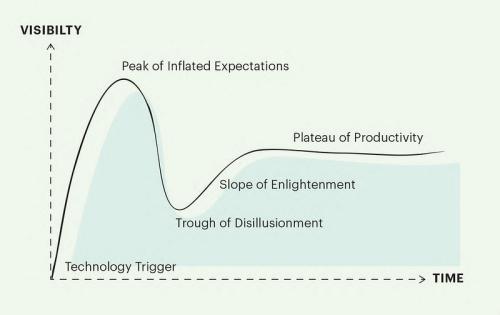
Outcome-based commissioning: can we rescue promise from the rubble of hype?
The first effect of policy is on expectations. In every case I can think of, the effect is inflationary.

MDSN: Community Healthcare Services
How Does Access to Community Health Services Vary Across the Midlands?

Playing our part in conversations about death
“Dad, why are all your ‘peptalks’ about death?” Children can be a source of fundamental insight. They seem to specialise in feedback of the unvarnished, unmediated and fully caffeinated variety. The kind of feedback that cuts straight to it. My youngest daughter, mid-way through our sunny walk down the hill to school, pressed on: “And you wear black all the time. You look like a crow…” Fundamental insight, and now fashion advice. This was quite the school run.

Need, demand, and supply of GP services: an old lens on an ever-present problem
About 20 years ago, I attended a lecture given by Andrew Stevens, a rather formidable and austere Professor of Public Health at the Un