
Strategy Unit devises a new method for classifying outpatient appointments
The number of outpatient attendances in England is now approaching 100 million each year.

Infant feeding problems, lockdown and attendance at Emergency Departments: what’s going on?
From our previous work, with Nuffield Trust and Health Foundation, we know that lockdown had a significant effect on attendance at Emergency Departments (ED). We also know that this effect was very unevenly distributed: some demographic groups stayed away far more than others.

Decisions to admit patients are not solely determined by clinical risk
Whether or not to admit a patient is one of the most routine yet important decisions a doctor in an Emergency Department

Inequities in children and young people’s mental health services
Good mental health during early years and childhood has a great bearing on health throughout life.

Less noise and more light: using criteria-driven analysis to tackle inequalities
Reducing health inequality is a long-standing aim of health policy. Yet the gap between policy aim and population outcome has grown in recent years: on most measures health inequalities have got worse.
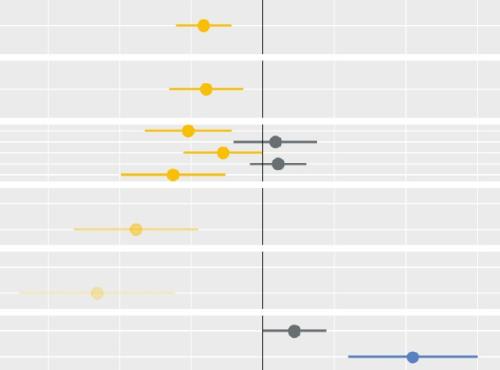
Socio-economic inequalities in access to planned hospital care: causes and consequences
Tacking inequalities in health is a long-standing NHS policy objective. Variation in the experiences and outcomes of different communities during the COVID-19 pandemic served to bring this issue back into focus.
Analytical Collaboration for COVID-19
Between March and December 2020 the Health Foundation; King’s Fund; Nuffield Trust; and the Strategy Unit collaborated to provide

Another look at inequality and NHS action on cardiovascular disease
Cardiovascular disease (CVD) continues to be one of the leading causes of death and disease in the UK.
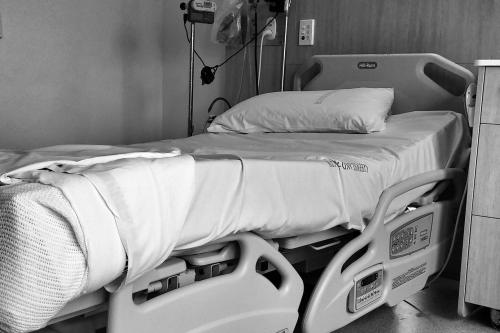
Strategy Unit analysis published showing changes in use of emergency departments under lockdown
We know that patterns of access to healthcare have changed during the pandemic.
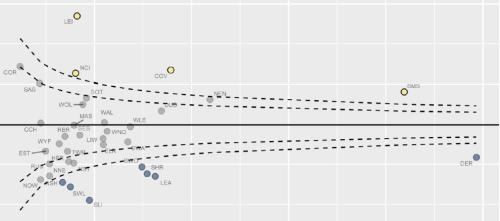
Equity and Cost Growth in Specialised Services
NHS specialised services provide care for people with complex or rare medical conditions.

End of Life analysis: what next? A perspective from Catherine Walshe
‘In this world nothing can be said to be certain, except death and taxes’.

End of Life analysis: what next? A perspective from Seamus O'Mahony
In this blog, the author of ‘The Way We Die Now’ - Seamus O’Mahony – sets our findings into a broader context. He also examines one topic raised in our analysis: chemotherapy at the end of life.
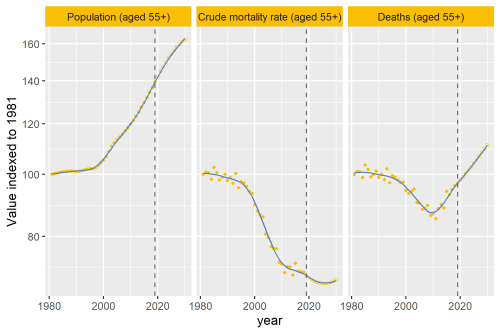
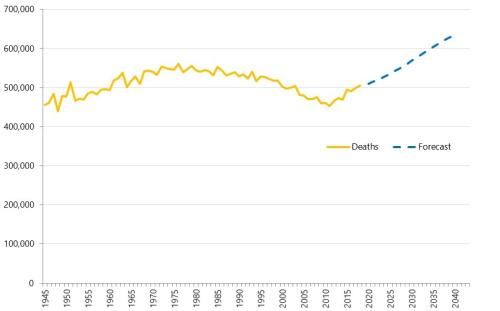
Why are deaths set to rise?
In our recent analysis of healthcare use in the last 2 years of life, we point out an important change that’s taking place to life and death in the UK.
COVID-19: breaking the cycle of deprivation and ill health
Promoting whole-system action on the wider determinants of healthy life expectancy in the shadow of the COVID-19 pandemic
Health service use in the last two years of life
Health and care services get just one opportunity to support people at the end of their life. When this support is compassionate and appropriate, unnecessary suffering can be avoided and grieving can be eased. When this is not the case, harm and distress can result. The difference in these experiences can be profound.

Socio-economic and environmental impact of Herefordshire and Worcestershire STP
Anchor institutions are large, typically non-profit, public sector organisations whose long-term sustaina

Accessibility of perinatal mental health services for women from Ethnic Minority groups
Barriers to accessing mental health care during pregnancy and the first postnatal year (perinatal period) seem to be greater for ethnic minority women.
How can Integrated Care Systems collect and use more ‘person-centred intelligence’?
Working with our partners
Outcomes based commissioning: A framework for local decision making
This local decision-making framework aims to empower systems as they look to design new contracting approaches aimed at improving outcomes.
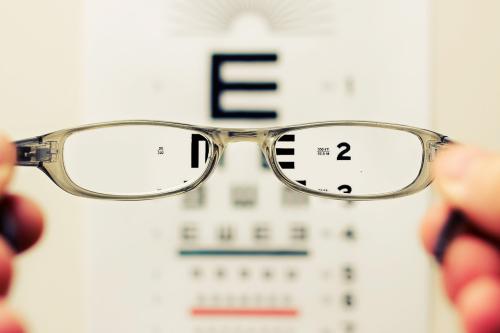
Key opportunities for eye health and well being
Eye health and sight loss services have historically had a lower profile in service provision compared to many other specialities. There is a view that the importance of eye health has been underrepresented in many Sustainability and Transformation Partnership (STP) plans.